Summer Research: Turning Risk into Readiness
December 9, 2025
Emily Wyman ’27 shares her experience in the Summer Research program.
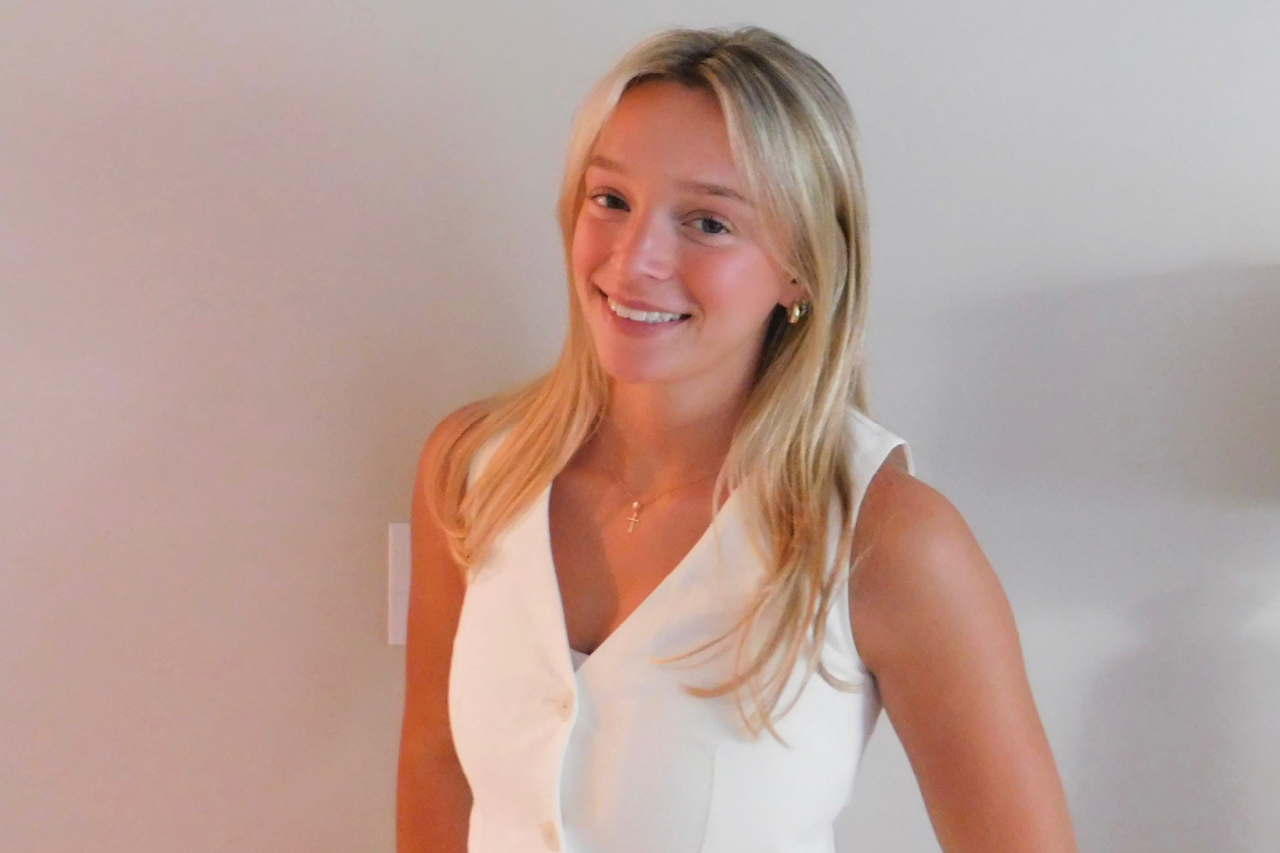
When I first heard about the opportunity to do research with Dr. Bob Enck, I wasn’t quite sure what to expect. However, since I have been part of the Sports Science research team here at St. John Fisher, I’ve fallen in love with the work, and I have never been so sure of something!
As an athletic performance major with a psychology minor, being part of the research team gave me hands-on experience that my classes couldn’t. In these fields, there is a common gap between analyzing the data and translating it visually. Being able to apply biomechanics and anatomy conceptually to develop a tool for analyzing athletes’ joint angles, while leveraging computer vision and data analysis, allows me to learn how to bridge that gap!
I have been working with the Sports Science research team since last semester. As a Sports Science researcher at Fisher, I work with a handful of athletic teams on campus, conducting testing with our force plates. Currently, I am also working as a sports scientist for our very own football team! This includes running tests with the athletes and analyzing/interpreting data to give coaches insights about how to enhance the team’s performance.
Being part of this team has anchored my focus on both my current work and future goals in the fields of sports science and strength and conditioning. After I earn my degree, I plan to earn certification as both a strength and conditioning specialist and a performance and sport scientist, as well as pursue a master’s in sports science.
I first heard about the Summer Research Fellowship Program when one of my colleagues and I were discussing internships. I jumped at the opportunity and applied. Being zealous about sports science, Dr. Enck and I knew we wanted to conduct research in something up and coming for the Sports Science team. Most of our work up until then had been enhancing performance and fatigue monitoring, but we’d not yet dived into injury prevention. This is where the idea of creating an ACL health protocol came in, and we set about building a video-analysis system to measure joint angles while leveraging Hawkin Dynamics force plates.
This project was motivated by a central question: Can computer vision be leveraged to conduct advanced analyses of joint angles in conjunction with force-plate data to evaluate ACL injury risk? We spent 35 hours a week working on this. A typical day was heavily spent in front of our computers, either doing research on ACL tear mechanisms and metrics, or coding to create the computer vision system. The tools used included; VSCode, Python, Hawkin Dynamics force plates and dashboard, Microsoft Excel, AI, iPhone 12s, AutoCrat, MacMini, a Drop-Jump Box (12, 14, 16in), Shortcuts, and human subjects. In addition to many physical tools, it required a resilient and diligent mindset, as well as a deep literature review.
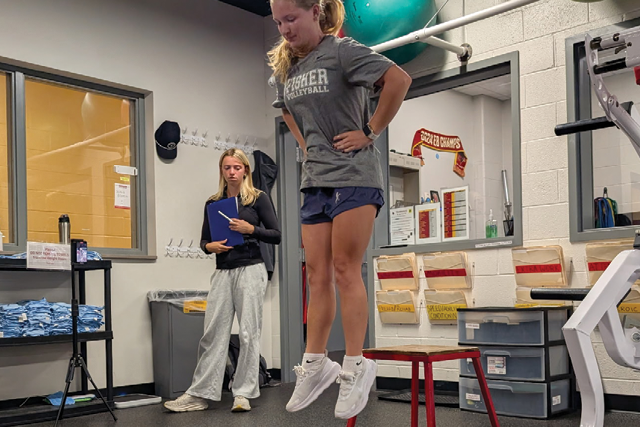
Over the course of 10 weeks we faced trial and error, time after time. Being able to accurately measure hip and knee flexion angles took various attempts to make sure we were getting exceptionally accurate numbers, as well as full automation of the computer vision system and reports of athletes. More than half of the days, the attempts and approaches we took did not end the way we had thought or failed. However, this made our breakthroughs on other days that much better! Seeing the finished product—an athlete performing a drop jump while joint angles were calculated internally, sent to our Mac Mini, and automatically compiled into Excel sheets with all angles and graphs—was incredibly rewarding!
This led to communication with some of Fisher’s coaches, athletic trainers, and the strength and conditioning coach. Navigating through this process, in order to implement and gain buy-in from stakeholders, was a crucial part of this research. I wanted to use language thoughtfully with coaches that would be easily digestible. Throughout these conversations, the perspective of the way we looked at our ACL system changed. Our initial goal had been to pinpoint athletes who are “at risk” of an ACL injury. As an athlete myself, I imagined that being told I was at risk of injury would be quite frightening. I decided to take a different approach. Instead of focusing on such a negative connotation, we flipped it. By framing it as the “ACL Health Protocol,” we changed the environment surrounding our system.
Our protocol isn’t meant to be a 100 percent predictor of injuries in athletes, because we can’t predict the way an athlete will respond and move on the field. Instead, this tool is intended to help coaches recognize athletes who may benefit from additional training to develop muscle memory during unplanned cutting and deceleration. Building on this, our next steps will be focused on implementing the tool with a couple of our women’s teams at Fisher in the coming months. This will be followed by prevention training with our Strength Coach and Athletic Trainers, and then retesting after the training period to look for any changes.

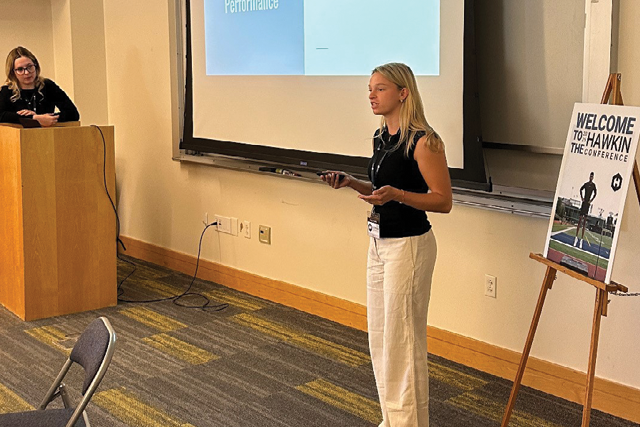
During this 10 week research period, Dr. Enck, Makena Evans, and I had the incredible opportunity to travel to Portland, Maine to attend the 2025 Hawkin Dynamics Conference, where we presented on the utilization of force plates at a small university, Being able to make connections with profound sports scientists from all over the world, and the people behind the scenes of force plates, was surreal. Not only did I learn about how various practitioners utilize and program force plates for different sports and tactical settings, I also heard firsthand about the research I used when conducting a literature review.
This summer was such a blessing to say the least, in terms of professional and discipline advancement, but also mental growth. Engaging in critical thinking and problem-solving has helped me to be better equipped to handle adversity. Being a part of a team has also taught me how to become a fruitful leader by allowing me to manage my communication, initiative, interpersonal, and organizational skills. Effective leadership will enable me to inspire and motivate athletes, thereby fostering a positive and uplifting community, which holds utmost importance to me.
This fall, we have had the opportunity to begin testing based off our research, beginning with the women’s volleyball and soccer teams.
If I could give advice to anyone considering research, regardless of their field of study, it would be to take the leap! Research not only helps you gain valuable skills and knowledge, but it also challenges you to think critically, solve problems creatively, and contribute something meaningful to your discipline. Even if the path feels uncertain at first, the experience can open doors, build confidence, and give you a deeper appreciation for the work being done in your area of interest.