Loss Lecture Explores Evolution and Earth Surface Environments
Renowned paleobiologist and astrobiologist Dr. Andrew Knoll, Fisher Professor of Natural History and Earth and Planetary Sciences, Emeritus in the Department of Organismic and Evolutionary Biology at Harvard University, will deliver the annual Loss Lecture at St. John Fisher University. Free and open to the public, the lecture will be held at 7 p.m. on Thursday, April 9, in Cleary Family Auditorium in Kearney Hall.
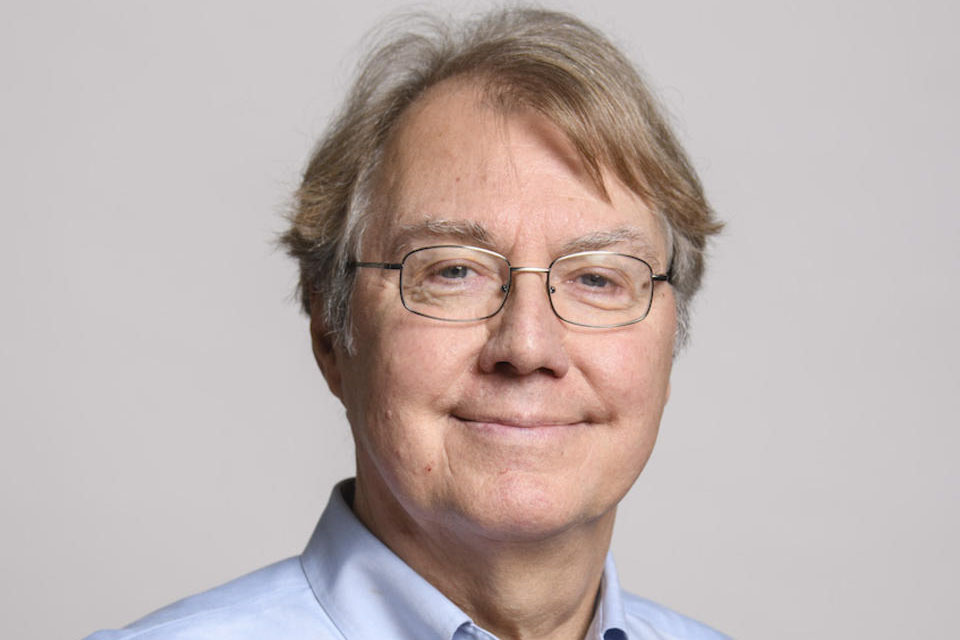
Knoll will lecture about the evolution of Earth surface environments and the relationships between the two. Life on Earth could not have begun on an oxygen-rich planet, yet we could not live without it. According to Knoll, those two facts, by themselves, tell us that Earth surface environments have changed markedly through time. His talk will touch on the exploration of this issue and how major events in Earth’s oxygen history reflect the interactions between physical and biological processes, and how they go a long way toward explaining the timetable of evolution.
Knoll is broadly interested in the evolution of life, the evolution of Earth surface environments, and the relationships between the two. He is particularly interested in Archean and Proterozoic paleontology and biogeochemistry; however, both past and current projects include investigations of selected problems in Phanerozoic Earth history. Motivating evolutionary issues include the diversification of prokaryotic metabolisms on the Precambrian Earth, the initial radiation of eukaryotic life, and the rise of large complex algae and animals near the end of the Proterozoic Eon, as well as phytoplankton evolution and mass extinctions. In a genuine extension of this research, Knoll is also involved in Mars exploration. He earned his bachelor’s degree from Lehigh University and received his Ph.D. from Harvard University. Prior to teaching at Harvard University, Knoll taught at Oberlin College.
This lecture is made possible through the support of Janice Loss ’92 and the Loss family.