Land Down Under: Pharmacy Faculty Spends Sabbatical in Oz
February 20, 2026
In summer 2025, Dr. Kathryn Connor, associate professor of pharmacy practice and administration in the Wegmans School of Pharmacy, spent her sabbatical in a land far, far away amid kangaroos and koalas; rich culture; vibrant cities with museums, markets, gardens, and winter festivals; beautiful coastlines; and the Southern Cross constellation, seen only from the southern hemisphere.
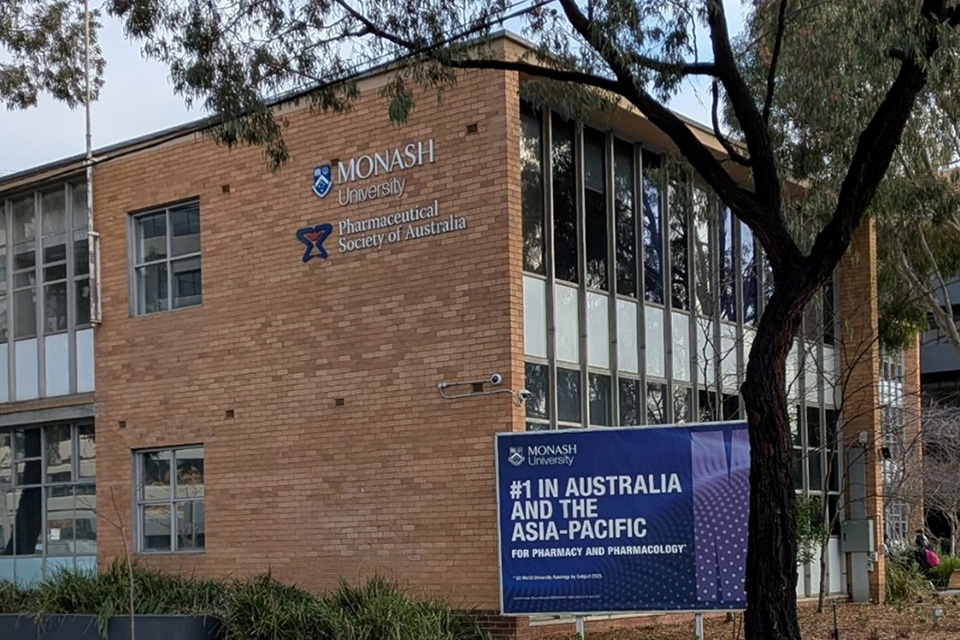
For six weeks, she immersed herself in Australia (also whimsically known as Oz) as she has long been inspired by the country’s dedication, efficiency, innovation, and leadership in critical care medicine, particularly during the pandemic. She wanted to learn more about the Australian healthcare system and clinical pharmacy practice and connected with faculty and students at Monash University’s Faculty of Pharmacy and Pharmaceutical Sciences in Melbourne, Victoria, a top-tier institution that developed the MyDispense software used at the Wegmans School of Pharmacy, among other innovations.
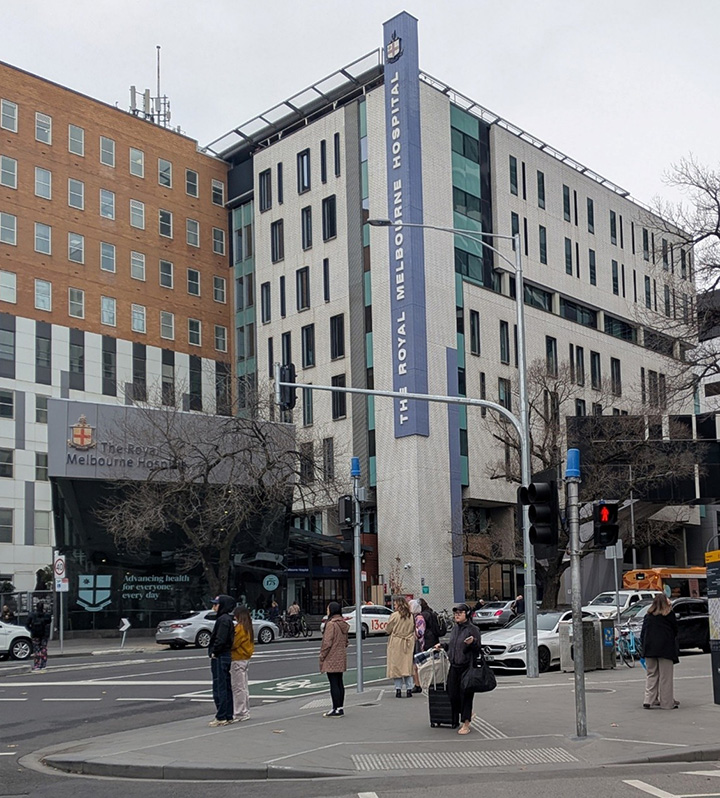
While there, she spent time at the Royal Melbourne and The Alfred hospitals, both of which are reputable academic institutions and “research powerhouses” within the Australian and New Zealand Intensive Care Society Clinical Trials Group (ANZICS-CTG). Connor noted that the group is considered among the most productive critical care research networks in the world, having enrolled patients in pivotal trials like REMAP-CAP (Randomized, Embedded, Multi-factorial, Adaptive Platform Trial for Community-Acquired Pneumonia) and the BLING (Beta-Lactam Infusion Group) trial series. Her sabbatical goals were to explore the development of routine therapeutic drug monitoring for beta-lactam antibiotics, share best practices, and learn more about shared research priorities like pain, sedation, and delirium management in the ICU. Early in her time there, she was invited to the ANZICS ICU Clinical Leadership Conference in Melbourne, which provided her with a wonderful interprofessional introduction to the region’s ICU culture. The conference focused on team dynamics, psychological safety, and the neuroscience of leadership. She also had the opportunity to observe the clinical translation of the BLING III trial findings into routine intensive care unit (ICU) while gaining exposure to complementary protocols for routine beta-lactam therapeutic drug monitoring.
She calls her time there “truly immersive.” In addition to daily rounds at the hospitals, she attended pharmacy workshops, presentations, and journal clubs, and learned about the Australian healthcare system from different clinicians and administrators. She also collaborated with physicians and microbiology lab personnel to gather background information that aims to advance the development of routine beta-lactam therapeutic drug monitoring at the University of Rochester Medical Center (URMC). Finally, she completed over 15 hours of pre- and post-work for the ANZICS conference and presented to the Royal Melbourne Hospital pharmacy department about her teaching, clinical, and research experience, focusing on the Wegmans School of Pharmacy’s Pharm.D. program and clinical pharmacy practice models at URMC.
From a pharmacy education perspective, she noted differences in education and training between the U.S. and Australia. In the U.S., the primary pharmacy degree is the Doctor of Pharmacy (Pharm.D.), and in Australia, students typically begin with a bachelor’s or master’s degree (BPharm or MPharm) and then have the option to complete a Ph.D. to specialize in research, academia, or advanced practice. From an experiential education standpoint, she noted that the U.S. Pharm.D. integrates practice experiences into the curriculum, while Australia utilizes a 48-week paid internship post-graduation. In practice, she observed tremendous collaboration and dedication to patient care, strict pharmacist-to-patient ratios, and very well-staffed pharmacy departments.
“This has influenced my perspective on ICU pharmacist workload and my ongoing work with the US-based OPTIM (Optimizing Pharmacist Team-Integration for ICU Patient Management) Investigator Group,” she said. “Also, ICUs there are often ‘mixed’ (general) rather than specialized, so pharmacists maintain a broader clinical expertise — caring for trauma, medical, burn, cardiovascular, transplant, and oncology patients simultaneously — rather than specializing solely in surgical critical care as I do.”
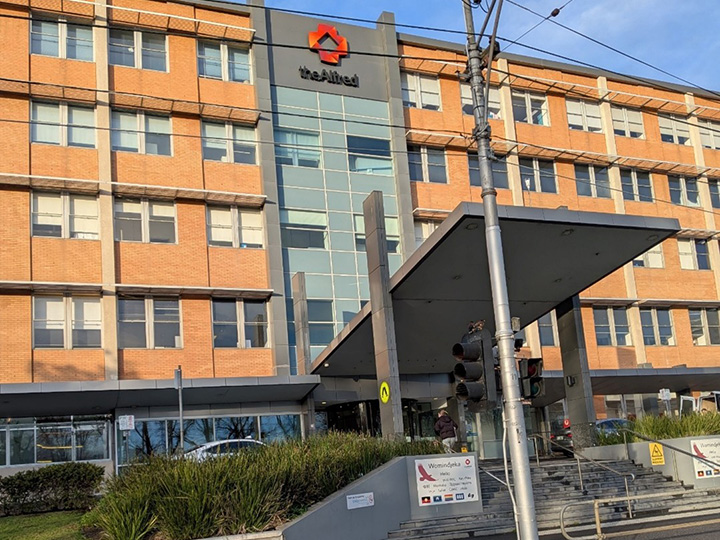
She was impressed by the “Partnered Pharmacist Medication Charting” model, noting that unlike in the U.S. where pharmacists often reconcile medications and then wait for a physician to enter the orders, at The Alfred, credentialed pharmacists proactively draft the admission medication orders, which the physician then reviews and signs. She observed that this collaborative model improves workflow and has been shown to drastically reduce medication errors on admission.
Now that she is back home, she is hoping to bring innovation and best practices to her work here. Since her return, she has been exploring the feasibility of developing routine therapeutic drug monitoring for beta-lactam antibiotics and linezolid, an initiative directly informed by her collaboration in Australia. “This is vital for optimizing therapy for critically ill patients and decreasing antimicrobial resistance. Additionally, witnessing their early, particularly severe respiratory virus season this past summer (their winter) has prepared me for how we can optimally manage our own ICU patients this season back home.”
Overall, Connor said that her time in Australia was transformative, allowing her to compare both the Australian and American systems through a critical lens and identify areas to innovate and optimize pharmacy education and patient care here. She also noted many similarities between the two countries. “This experience also underscores how interconnected our world is; even two societies and cultures on opposite ends of the globe are heavily influenced by each other in many ways.”
She plans to incorporate the contemporary clinical knowledge and leadership insights she acquired into her didactic and experiential courses. In addition, she plans to mentor pharmacy students and her URMC residents using the broader perspectives she gained related to antimicrobial stewardship in diverse populations, ensuring they understand clinical pharmacy practice on a global scale.
Her sabbatical, overall, gets an A+ from her.
“It reaffirmed for me that while healthcare systems and protocols may differ, the dedication of pharmacists and other healthcare professionals to optimizing patient care is universal,” she said. “Australia as a country is vastly underrated. It is not just a distant vacation destination, but a sophisticated hub of strong clinical science, leadership, medical innovation, diverse culture, and incredible beauty and biodiversity that exceeded my expectations.”