Fisher Nursing in Ireland to Explore Cultural Differences in Palliative Care
March 19, 2026
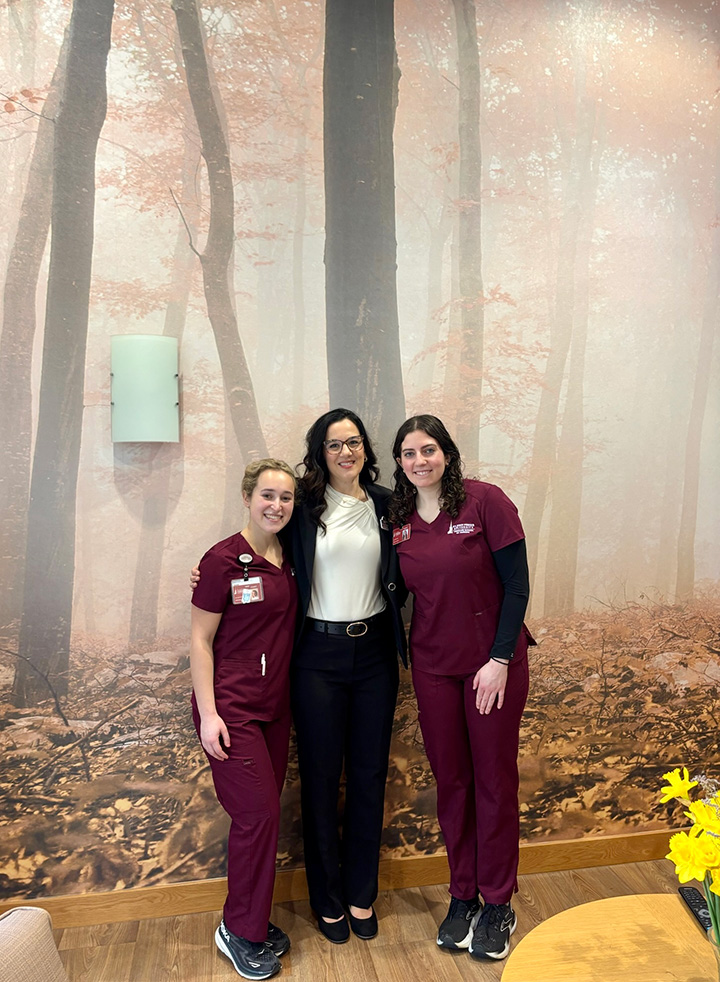
Two Fisher nursing students had the opportunity to travel to Ireland with Dr. Tricia Gatlin, dean of the Wegmans School of Nursing, and Joy Hogan, visiting assistant professor, during spring break to study and assess the differences between hospice care in Ireland and the United States.
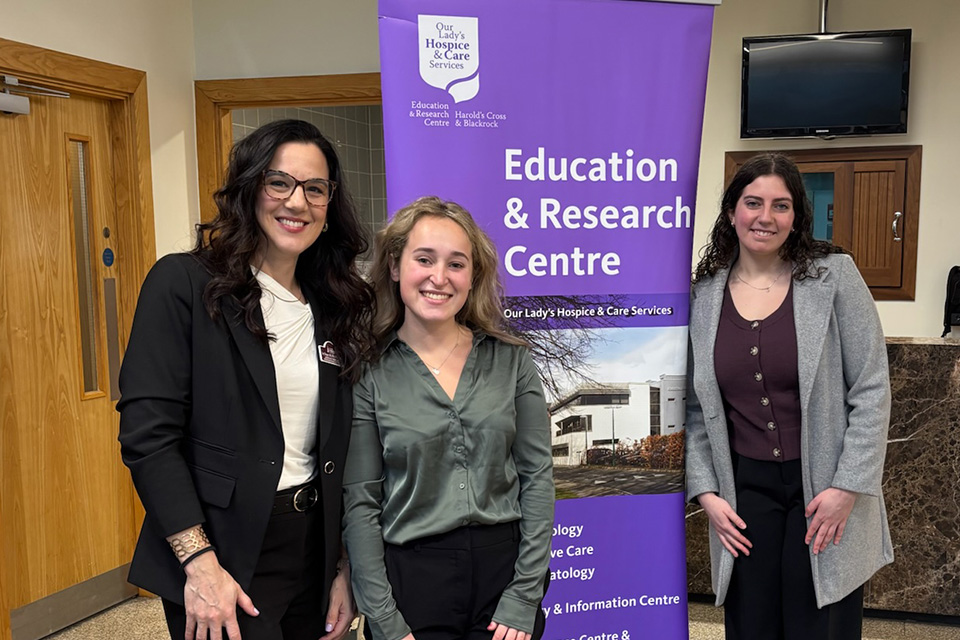
The trip was created through a partnership with the University College Dublin (UCD) and funded in part by the Helen and Robert Nealon Irish Travel Award Endowment. The funds from the endowment are to be used to provide funding to nursing students participating in an Irish nursing experience.
Exploring Nursing Care Across Cultures
This past December, Dr. Fiona Timmins, professor of nursing, dean, and head of school at UCD’s School of Nursing, Midwifery and Health Systems, visited Fisher and served as a guest lecturer in several of the nursing undergraduate courses. UCD has a relationship with a large local hospice center in Dublin called Our Lady’s Hospice. The staff at Our Lady’s, in partnership with UCD, created a three-day immersive hospice experience for the students.
Second-semester junior and senior nursing students were invited to apply to participate in this opportunity. To be eligible, they must have completed the Palliative and End-of-Life Care course, a community-engaged learning course where students spend time as volunteers at 17 local comfort care homes to learn how to care for people in hospice. In total, 19 students applied, all of whom expressed a particular interest in palliative and end-of-life care. The application included an essay and two faculty recommendations.
Gabriella Lawrence and Brynn Calvert, both seniors, were chosen for the trip. While in Ireland, they were able to participate in care for patients with serious illness and spent time learning from hospice experts in Dublin. They also had the opportunity to visit and tour the School of Nursing at UCD and learn from faculty there.
From Classroom Curriculum to Clinical Care
For Lawrence, the palliative care course she completed as a junior at Fisher instilled the idea that nurses can become an important resource for patients and families as they prepare for death. As she continued in her education and is now approaching graduation, she has been searching for opportunities to expand her knowledge in palliative and hospice care, specifically in the role that nurses play in supporting families once the patient has passed.
“Ireland was a great opportunity to see how other healthcare systems prioritize end-of-life care and what we can bring back to the U.S. to improve our own systems; starting with the nursing care we provide to our own patients,” she said.
A key difference she observed between the United States and Ireland lies in how each country structures and utilizes the role of the clinical nurse specialist (CNS). In the U.S., CNSs are advanced practice registered nurses prepared at the graduate level who provide expert clinical care within a defined specialty. Their scope includes diagnosis, treatment, ongoing patient management, consultation, and systems-level practice leadership. They also influence organizational practice and support evidence-based improvements across patient populations.
In Ireland, the CNS role is similarly grounded in advanced specialty expertise but is organized within a more structured, specialty-focused framework. Irish CNSs are deeply embedded in defined clinical pathways and are often central to specialty services — such as palliative and hospice care — where they deliver advanced assessment, care planning, patient and family education, and coordination of multidisciplinary care. Their practice emphasizes expert, specialty-specific clinical leadership within the care continuum.
While both countries employ CNSs as advanced practice clinicians, the U.S. CNS role spans both direct care and organizational leadership, whereas Ireland places stronger emphasis on specialty-driven, pathway-based clinical practice — particularly within areas such as hospice and palliative care.
Community-Based Hospice and Palliative Care
“I was lucky to see just how much community involvement is prioritized at Our Lady’s Hospice on top of the inpatient care that they provide for patients. There was an entire team of almost 20 clinical nurse specialists who focused on conducting home visits where they assess the patient’s health status, the current progression of their disease processes, whether the care they receive from home care services is adequate to their needs, and the next steps in their care,” she said. “As a group, they determine if the patient is showing signs of improvement, deterioration, or if they are maintaining their health. By meeting together as a team, the clinical nurse specialists and doctors can see the whole picture and make well-educated decisions regarding the patient’s next steps in care.”
She was impressed with the attention to detail that was invested in this community-based care and admired how they were able to establish an entire team focused on the patients’ social and physical health.
“They even advocated for new practices when they thought a specific patient could benefit from it and implemented those plans right in the same meeting. This team was a great representation of holistic care that saw the patient for who they were and what they needed beyond just their life-limiting diagnosis,” she said.
End-of-Life Care Beyond Medical Needs
During the trip, she was perhaps most impacted, and a little surprised, by the facility’s pub that was added after surveying patients and families about what kind of resource would improve the environment of the inpatient hospice unit.
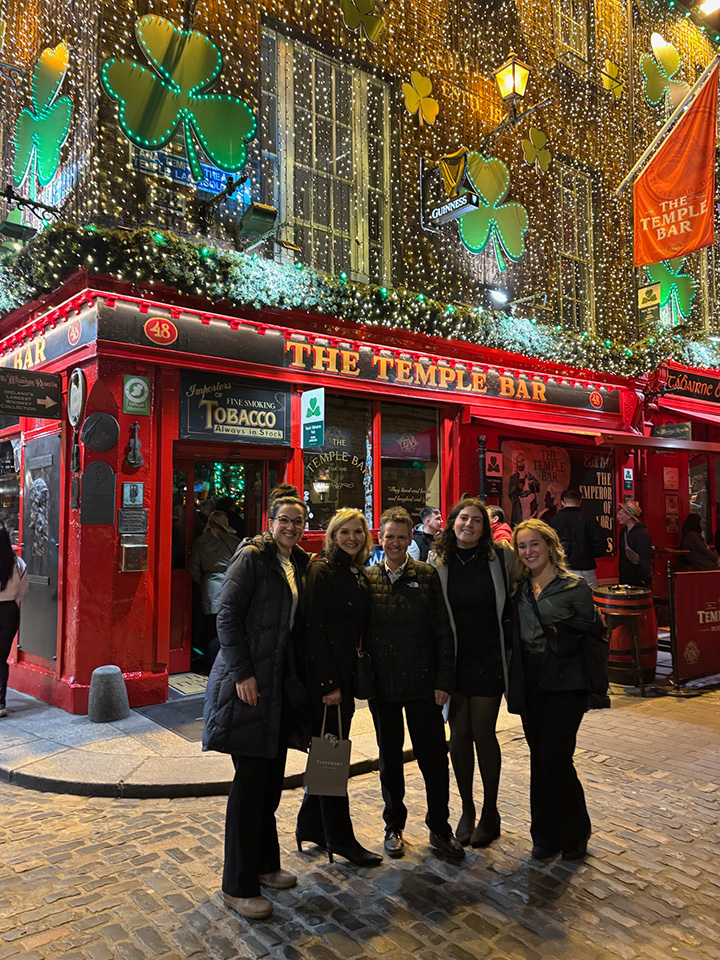
“In Ireland, going to the pub at the end of the day is an important part of the culture, and most families form their strongest memories around nights spent together over a drink and sports game. For many families, all they want is to enjoy one more drink together with their loved ones, reminiscing on memories spent together,” she said. “What moved me most was how some patients who are receiving hospice care don’t have family and friends who are able or willing to come in and be by their side through the dying process; however, in the pub, other families will invite these patients to join them. The fact that just one room creates so many memories but also grows a whole new support system for patients is so beautiful.”
Our Lady’s Hospice also provides respite and rehabilitation services for patients who are in all different stages of having a life-altering disease. This provided the students with a first-hand look at how group settings can benefit the overall care for patients and the strong support system that they can build with people who are struggling with similar health complications. While there, Lawrence observed a group session that focused on patients who are struggling with different respiratory conditions that leave them out of breath from doing simple daily tasks. In the session, patients were able to share their experiences with the diagnosis and how they cope day to day.
“Receiving a life-changing diagnosis can make it very difficult for patients to find motivation to keep themselves going on a daily basis; however, I saw how these groups can spread hope and build new coping skills to improve their quality of life,” she said.
Enhancing Nursing Skills to Support Patients with Terminal Illness
Calvert was drawn to apply to the trip as she currently works at Strong Memorial Hospital in the Wilmot Cancer Center and has accepted a job upon graduation. Her experience as a student nurse on the floor has exposed her to many patients who have a terminal diagnosis and go into hospice care. She wanted to strengthen her skills for this population of patients and thought this immersive experience would be a great way to do so.
She noticed both similarities and differences between the countries’ approach to hospice care. For example, both systems have high standards for both providers and medical care, but facilities offering palliative care for patients were different.
“The facility in Ireland was more focused on a holistic approach, instead of a strictly medical approach. It included a jacuzzi, family rooms, debriefing space, a rose garden, a chapel, a café, a pub room, and more, all designed to make the patients feel as normal and as at peace as possible,” she said.
The facility also allowed visitors without restrictions in terms of number of visitors and hours for visitation, and pets were allowed. She also liked that there were calming therapists who provide meditation and relaxation therapy.
“In the hospital in the U.S., the nurses are all dedicated to comfort and peace in their patients as well, but these amenities simply are not as accessible on a hospital unit as they are in a designated building. The small comfort care/hospice homes I have experienced are closer to this, but they are far and few, and overall less accessible here,” said Calvert.
Addressing Medical and Psychosocial Needs
One experience she had with a medical doctor showed her the human side of palliative care. She had the opportunity to sit in on a “hand-off” with a patient and the providers. She said the doctor “was wonderful” and made sure to introduce every person in every room, remembering everyone by name and addressing them with kindness and respect. Calvert studied her style: she took her time, was present, and often sat right on the edge of the patient’s bed or crouched down to get to their level next to the bed.
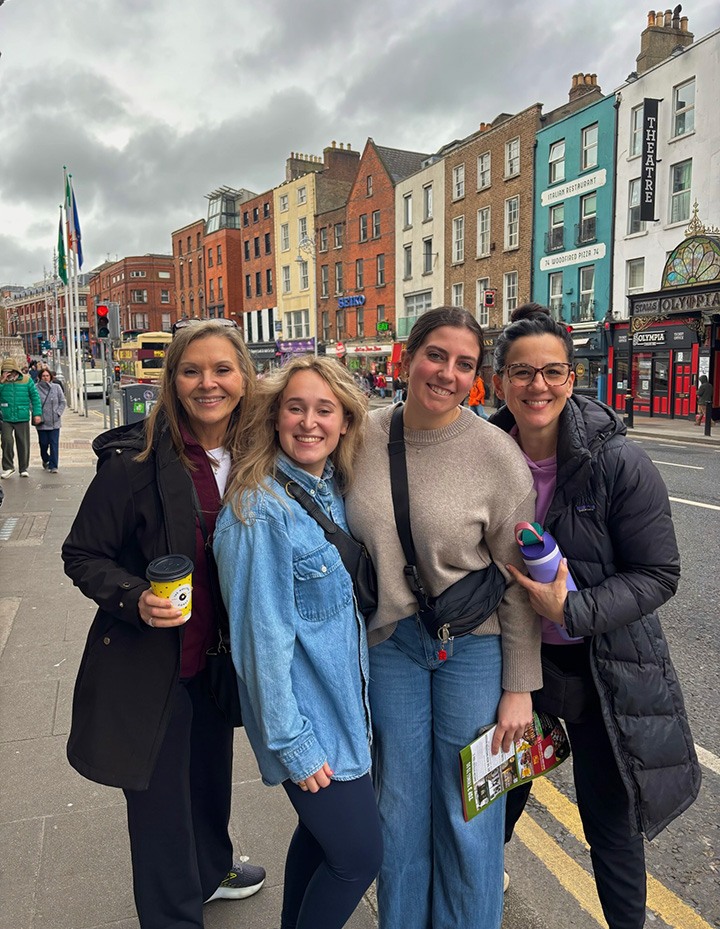
“She touched on the medical aspect of their care, and made necessary changes as needed, but then really asked about their psychosocial needs as well. The patients opened up to her easily, and I could tell they trusted her,” noted Calvert. “She was very honest about the questions they had regarding their phase of life and other concerns. She asked about their friends, family, pets, and personal information that the typical provider does not always know about their patient. I really enjoyed seeing this, especially because in the hospital, rounds often are a little more rushed and focused on medical aspects of care. This showed me how important it is for this population to still be treated like people, who have opinions, and stories they still want to tell.”
Calvert says that this experience will influence her work as an oncology nurse and showed her to be more aware of how to approach patients on palliative care.
“In a hospital unit, it can be easy to get swept up in medically complex patients rather than the holistic needs of end-of-life care. This inspired me to be more attentive to their psychosocial needs and be a better advocate for comfort and fulfilling wishes whenever possible,” she said.
Both she and Lawrence agreed that what they observed in Ireland resonated with what they had learned as students in the Wegmans School of Nursing.
“At Fisher, we constantly talk about how patient-centered care is the foundation to high quality nursing care, and visiting Ireland has truly shown me how far we as healthcare workers can go when we focus our resources towards our patient’s specific needs,” said Lawrence.