Pharmacy Students Advocate on Pharmacy Legislative Day in Albany
May 4, 2026
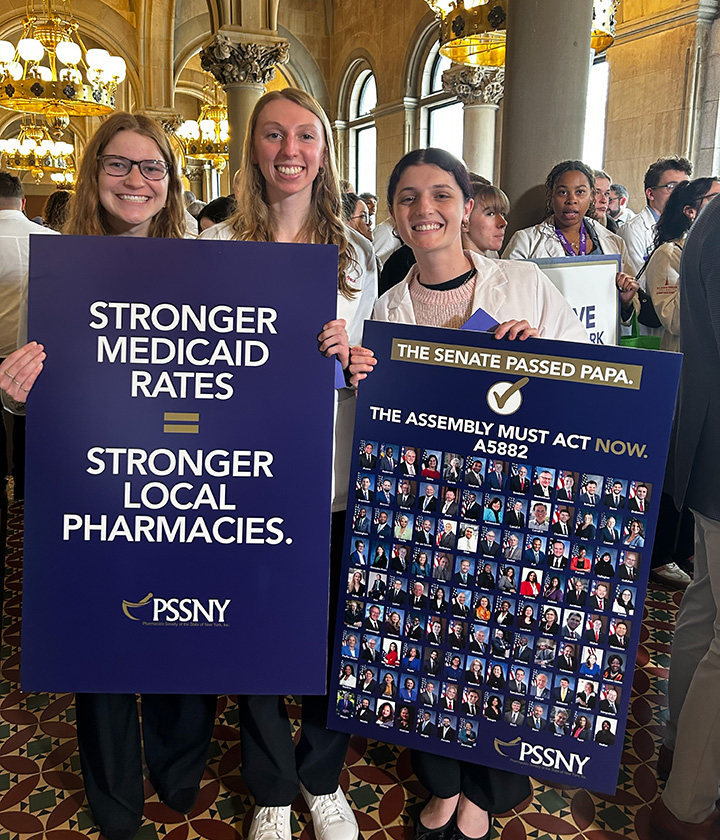
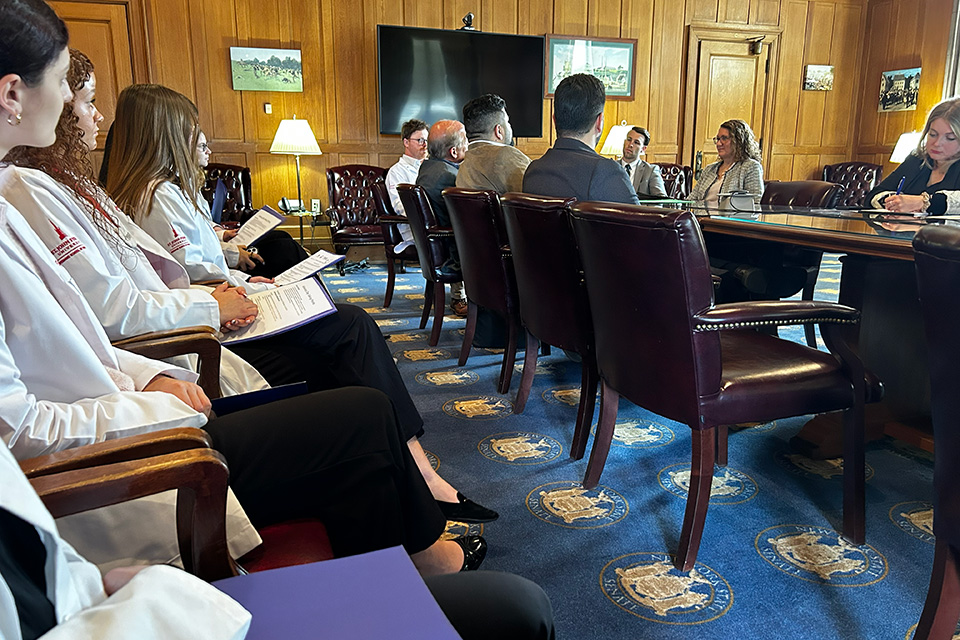
This April, 37 pharmacy faculty, students, and local preceptors descended upon Albany to discuss critical pharmacy legislative issues. They were joined by seven other schools of pharmacy across the state totaling a group of more than 200 pharmacists and student pharmacists for Legislative Day.
The goal of the experience was to introduce students to lobbying as a pharmacy professional. Pharmacy students receive didactic training in both state and federal law. Lobbying state assemblymen and senators provides them an opportunity to actively engage.
“My personal goal for the students was to shake the anxiety of speaking to government representatives, reinforce their level of expertise and training, and open their eyes to the responsibilities pharmacists have in promoting legislation,” shared McDonald.
During the legislative session, three proposed bills were prioritized, with the “PAPA” bill at the forefront of their lobbying effort. This piece of legislation requires Pharmacy Benefit Managers (PBMs) to reimburse pharmacies at a reasonable/equitable level and set standards for fees. Currently, PBMs are not held to a reimbursement standard, which has resulted in higher healthcare costs for pharmacies and patients alike.
The additional proposed legislation permits pharmacists to test for specific diseases, including COVID, flu, and strep, at pharmacy locations and additionally permits pharmacists to treat patients with a positive result. Since the COVID outbreak, pharmacists have been performing this “test-to-treat” practice under the federal PREP Act, which is temporary. The proposed legislation would codify the expansion of pharmacy services, which would lower the barrier to necessary treatments for many patients.
According to McDonald, the positive experience demonstrated to students that their representatives are people just like them, noting that some even shared high school experiences, with teachers, band directors, and local businesspeople found to be common acquaintances.
“The students had a resounding, positive experience lobbying for the profession,” said McDonald. “Most commonly, the students pointed out how surprising it was that the representatives were approachable, inquisitive, and simply ‘normal’ people.”
McDonald added that faculty encourage young pharmacists to participate in opportunities like this while they are students to create a personal experience advocating for healthcare change early in their careers. Professionals who engage early on are more likely to continue to advocate throughout their careers.
“My hope for any student engaged in lobbying efforts is to recognize that gaps in healthcare are mostly identified by those working ‘on the ground. Their experiences as practitioners will give them unique perspectives on the profession and patient experiences that can and will impact future legislation. I want each student to realize the weight they carry into their representatives’ offices when advocating for our profession and patients,” he said.
Pharmacy Students Advocate on Pharmacy Legislative Day in Albany2026-05-04T08:49:00-04:00This April, 37 pharmacy faculty, students, and local preceptors descended upon Albany to discuss critical pharmacy legislative issues. They were joined by seven other schools of pharmacy across the state totaling a group of more than 200 pharmacists and student pharmacists for Legislative Day.Dr. John McDonald, visiting assistant professor in the , led the group with Dr. Anne Schweighardt, associate professor and chair, pharmacy practice and administration, and Dr. Alex DeLucenay, associate professor, supporting the student meetings that day.
The goal of the experience was to introduce students to lobbying as a pharmacy professional. Pharmacy students receive didactic training in both state and federal law. Lobbying state assemblymen and senators provides them an opportunity to actively engage.
“My personal goal for the students was to shake the anxiety of speaking to government representatives, reinforce their level of expertise and training, and open their eyes to the responsibilities pharmacists have in promoting legislation,” shared McDonald.
During the legislative session, three proposed bills were prioritized, with the “PAPA” bill at the forefront of their lobbying effort. This piece of legislation requires Pharmacy Benefit Managers (PBMs) to reimburse pharmacies at a reasonable/equitable level and set standards for fees. Currently, PBMs are not held to a reimbursement standard, which has resulted in higher healthcare costs for pharmacies and patients alike.
The additional proposed legislation permits pharmacists to test for specific diseases, including COVID, flu, and strep, at pharmacy locations and additionally permits pharmacists to treat patients with a positive result. Since the COVID outbreak, pharmacists have been performing this “test-to-treat” practice under the federal PREP Act, which is temporary. The proposed legislation would codify the expansion of pharmacy services, which would lower the barrier to necessary treatments for many patients.
According to McDonald, the positive experience demonstrated to students that their representatives are people just like them, noting that some even shared high school experiences, with teachers, band directors, and local businesspeople found to be common acquaintances.
“The students had a resounding, positive experience lobbying for the profession,” said McDonald. “Most commonly, the students pointed out how surprising it was that the representatives were approachable, inquisitive, and simply ‘normal’ people.”
McDonald added that faculty encourage young pharmacists to participate in opportunities like this while they are students to create a personal experience advocating for healthcare change early in their careers. Professionals who engage early on are more likely to continue to advocate throughout their careers.
“My hope for any student engaged in lobbying efforts is to recognize that gaps in healthcare are mostly identified by those working ‘on the ground. Their experiences as practitioners will give them unique perspectives on the profession and patient experiences that can and will impact future legislation. I want each student to realize the weight they carry into their representatives’ offices when advocating for our profession and patients,” he said. /media/news-images/spring-2026/may/Advocacy-Day-Header.jpg