New Grant Advances Study of Pharmacist-Led Home Visits in Primary Care
Dr. Gabby Cipriano, associate professor of pharmacy practice and administration in the Wegmans School of Pharmacy, has received a research grant from the New York State Council of Health-System Pharmacists, Research and Education Foundation for her sabbatical research focused on the role of the pharmacy workforce in direct patient care through home visits.
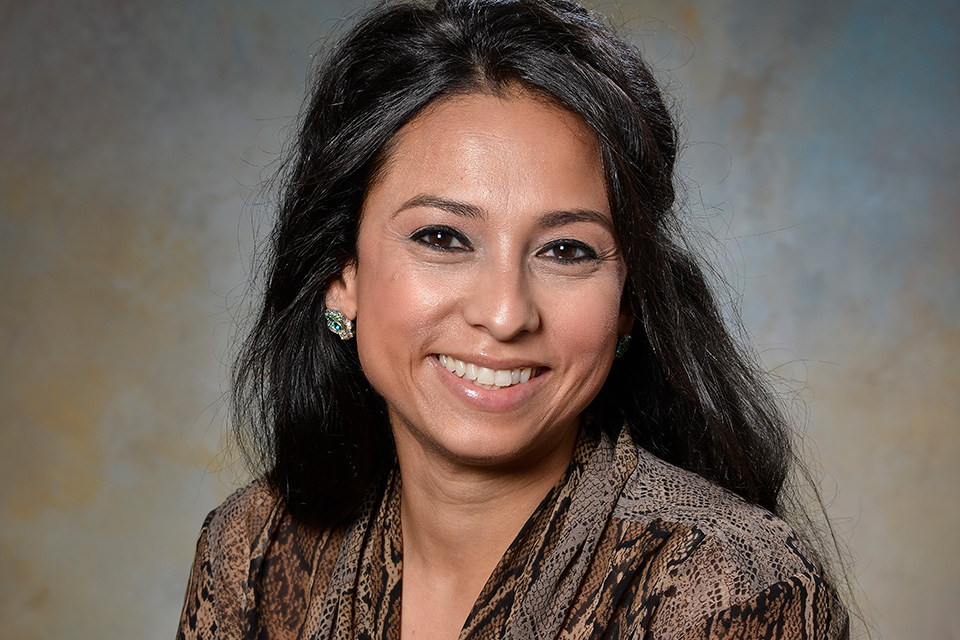
Her research project, titled “Empowering Patients at Home: Pharmacist Home Visits for Safer Medication Use,” will be supported by the $8,000 grant for one year. Cipriano, who provides clinical pharmacy services at Anthony L. Jordan Health was inspired by patients she sees regularly who are often confused about their current medications and regimen.
“In the clinic, I often find myself wishing I could simply ‘clean out their medicine cabinets,’” she said. “I frequently encounter patients who bring in a confusing mix of pill bottles, some brand new, some long expired, and many that are duplicates. In many cases, patients are unable to verify which medications they are actually taking, often acknowledging that ‘they just take whatever the doctor told them.’”
Cipriano said the home visits will allow her to provide personalized medication education in the comfort of her patients’ homes. Anthony L. Jordan Health serves a large Hispanic population who often experience communication barriers in healthcare. Spanish-speaking herself, Cipriano is especially focused on enhancing patients’ understanding of the education that is being provided to them, as well as enhancing patient trust and satisfaction with care. Ultimately, her goal is to improve medication adherence and safety.
“As a Hispanic, Spanish-speaking pharmacist who shares a similar cultural background with my patients, I aim to foster the trust and engagement necessary for them to successfully manage complex chronic diseases. By providing this language-concordant and culturally sensitive care, I hope to empower them to take full control of the medications they are taking,” she said.
Her other goal is to evaluate the feasibility of a mobile pharmacy clinic integrated with existing primary care. Through her research, she hopes to identify trends in medication safety, adherence, and health outcomes and demonstrate a model for identifying and resolving drug-related problems during these home visits.
“The home visits will allow us to gain an overall big picture of other factors that may be contributing to medication safety or adherence concerns, things that may be difficult to capture during an office visit,” she noted.
A typical visit for Cipriano will include an analysis of current medications the patient has on hand, which she calls a “clean out of the medicine cabinet” conversation that will result in a comprehensive medication reconciliation. It will also include safety checks and medication or disease-related education, providing her with an opportunity to perform physical pill counts or discard any expired or inactive medications.
Part of the grant will support the translation of medication education into Spanish, clinical supplies such as blood pressure and blood glucose monitors, funding as needed for any external statistical analysis, and travel reimbursement for any patients who need additional trips to pick up medications.
Cipriano, who also precepts P3 and P4 students during their Introductory Pharmacy Practice Experience IV and Advanced Pharmacy Practice Experience years at Anthony L. Jordan Health, said this project will connect directly to her classroom.
“This experience will allow me to bring real-world clinical scenarios and patient stories into the classroom and highlight specific examples of how social determinants like transportation and language can impact medication safety and patient understanding,” she said. “I want my students to see that our role extends far beyond ‘verifying a script,’ it involves identifying gaps in medication adherence while maintaining the cultural humility required to build lasting patient trust.”